Sunday, September 2, 2018

The $48 Philips Hue Bloom LED smart lamp adds ambient light to your room

Smart lighting for every part of the house.

The Philips Hue Bloom Dimmable LED smart table lamp is down to $47.89 on Amazon. That price is more than $12 off the street price and the lowest it has reached this year. This matches an all-time low.

The sale on the Bloom is part of a much larger sale on Philips Hue products in general. You can save tons of money on starter kits, bulbs, and other accessories.

The Bloom is designed for indirect ambient lighting in your room. Use it to light up a piece of furniture or something like that. It is just as simple as plugging it in and turning it on, but if you want to add some extra control via your smartphone or a voice control ecosystem like Amazon's Alexa, you'll want to add it to a Philips Bridge. If you don't have one, there are plenty of starter kits on sale right now that have them. The Bloom also works with other systems like Nest and Samsung's SmartThings. Users give it 3.8 stars based on 177 reviews.

See on Amazon


from Android Central - Android Forums, News, Reviews, Help and Android Wallpapers https://ift.tt/2N7lZWp
via IFTTT

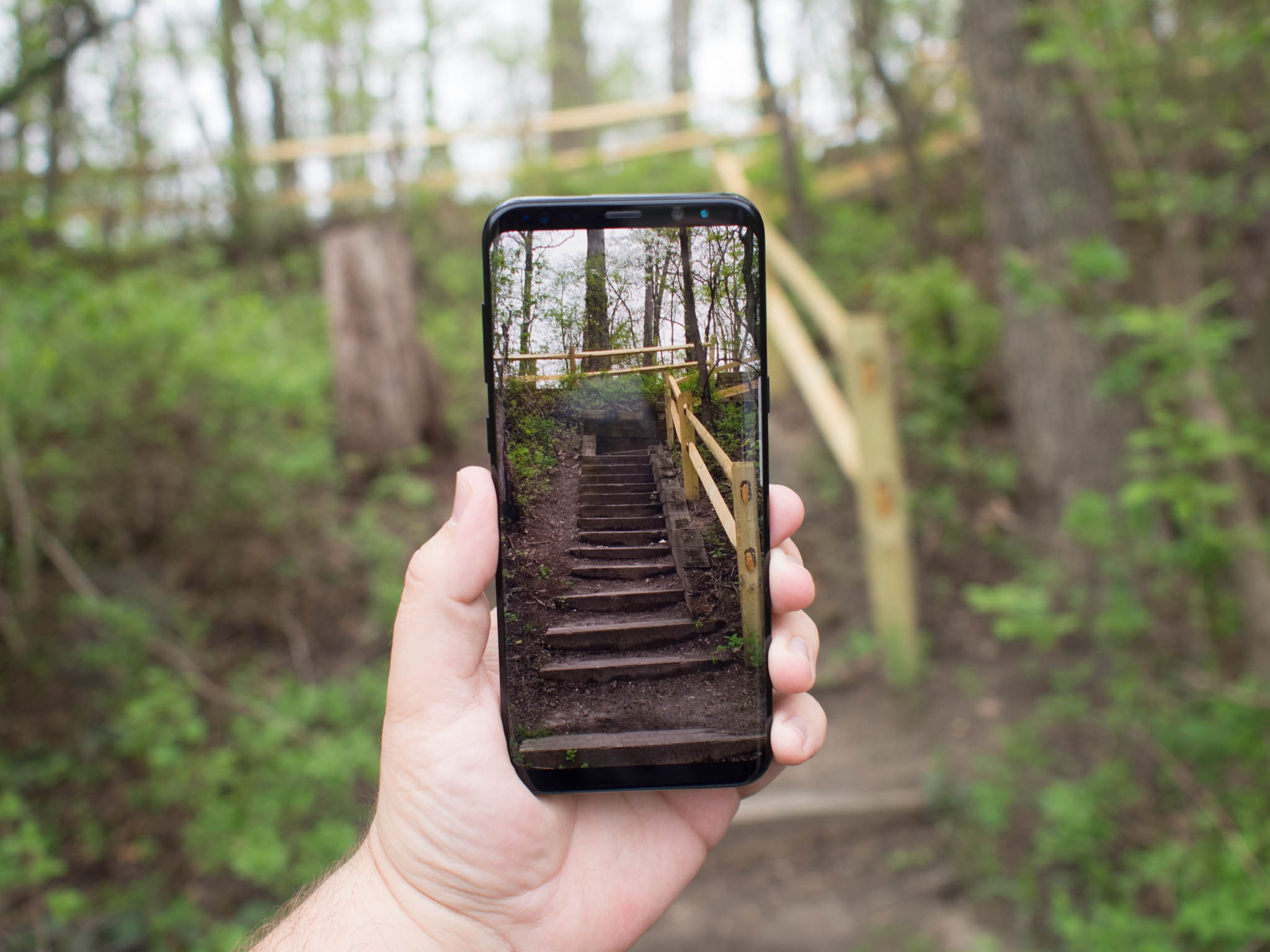
The best screen protectors for the Galaxy S8

Keep it scratch-free — for good.

It can be a little trickier to adhere a screen protector to the curved display of the Galaxy S8 and phones like it, but if you're worried about a cracked or scratched screen it's well worth the hassle. We've rounded up some of the most highly-recommended screen protectors for the Galaxy S8!

Whitestone Dome Glass

Top Pick

The Whitestone Dome Glass screen protector is arguably the best screen protector you can buy for your Galaxy S8. The kit includes a UV light which is used in the curing process to ensure a perfect installation that covers the curved edges of the screen. It's expensive for sure at $45, but you get what you pay for with quality protection.

See at Amazon

The Whitestone Dome Glass has proven to be a very popular screen protector and is currently on sale for $45, down from $60.

Check out this review and installation guide to get an idea of how this tempered glass screen protector uniquely adheres like no other screen protector you've seen before. If the worst case scenario has already occurred and your screen is cracked, think of this as a second chance screen before dropping hundreds of dollars on a proper replacement screen. With a UV light packaged to complete the curing process, this is a pricier option than other screen protectors out there but also more reliable based on user reviews.

i-Blason Tempered Glass Screen Protector

Budget Option

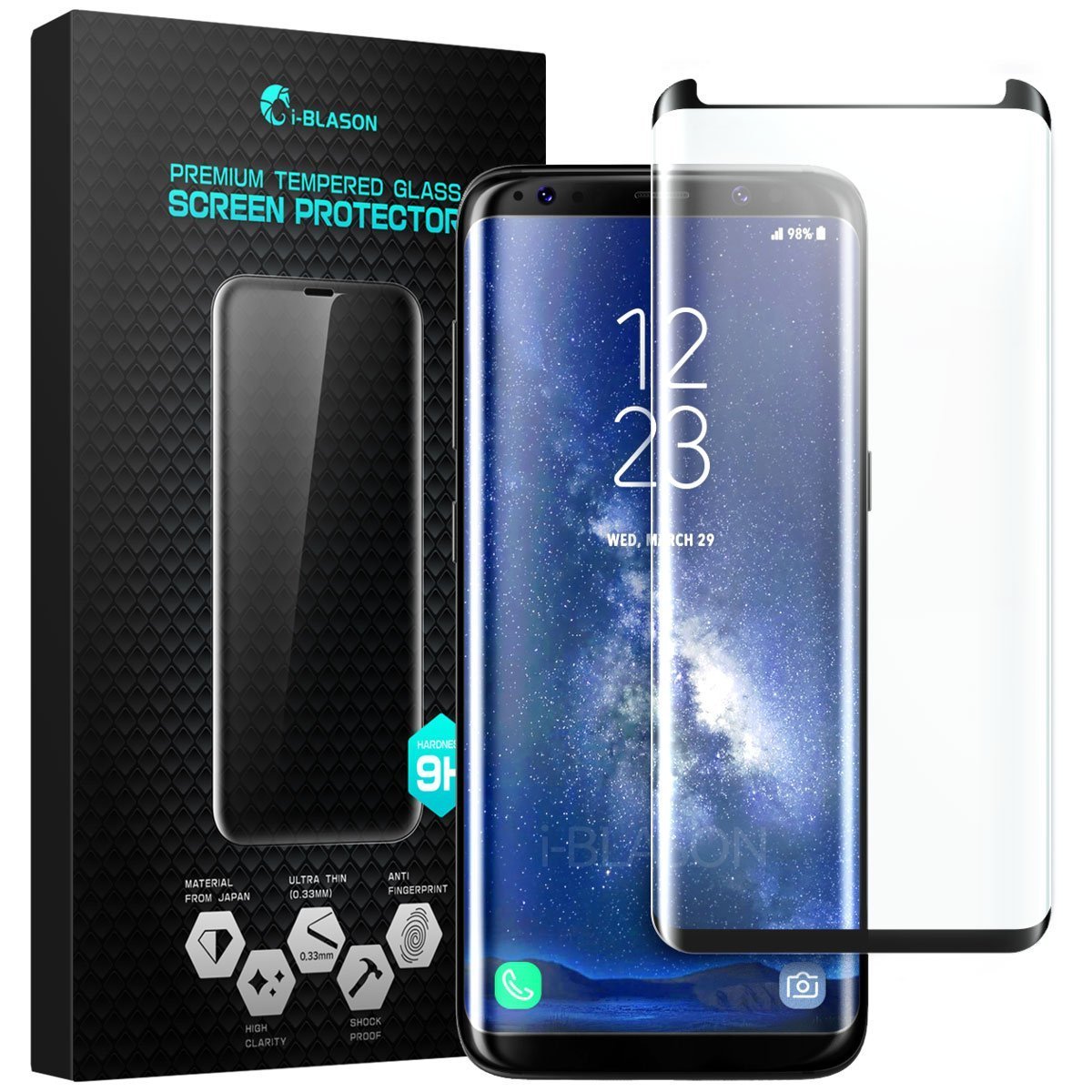
i-Blason makes a tempered glass screen protector that's designed to conform to the Galaxy S8's curve display. it's also slightly shorter than the full height of the phone so that the edges won't be lifted by a case. Get this case-friendly screen protector for just $10.

See at Amazon

This recommendation came from an AC reader in our comment section and is a great option if you also want to use a case to keep your phone protected. It features everything you'd want from a tempered glass screen protector at a very reasonable price.

Spigen NeoFlex screen protector (2-pack)

Best for Cases

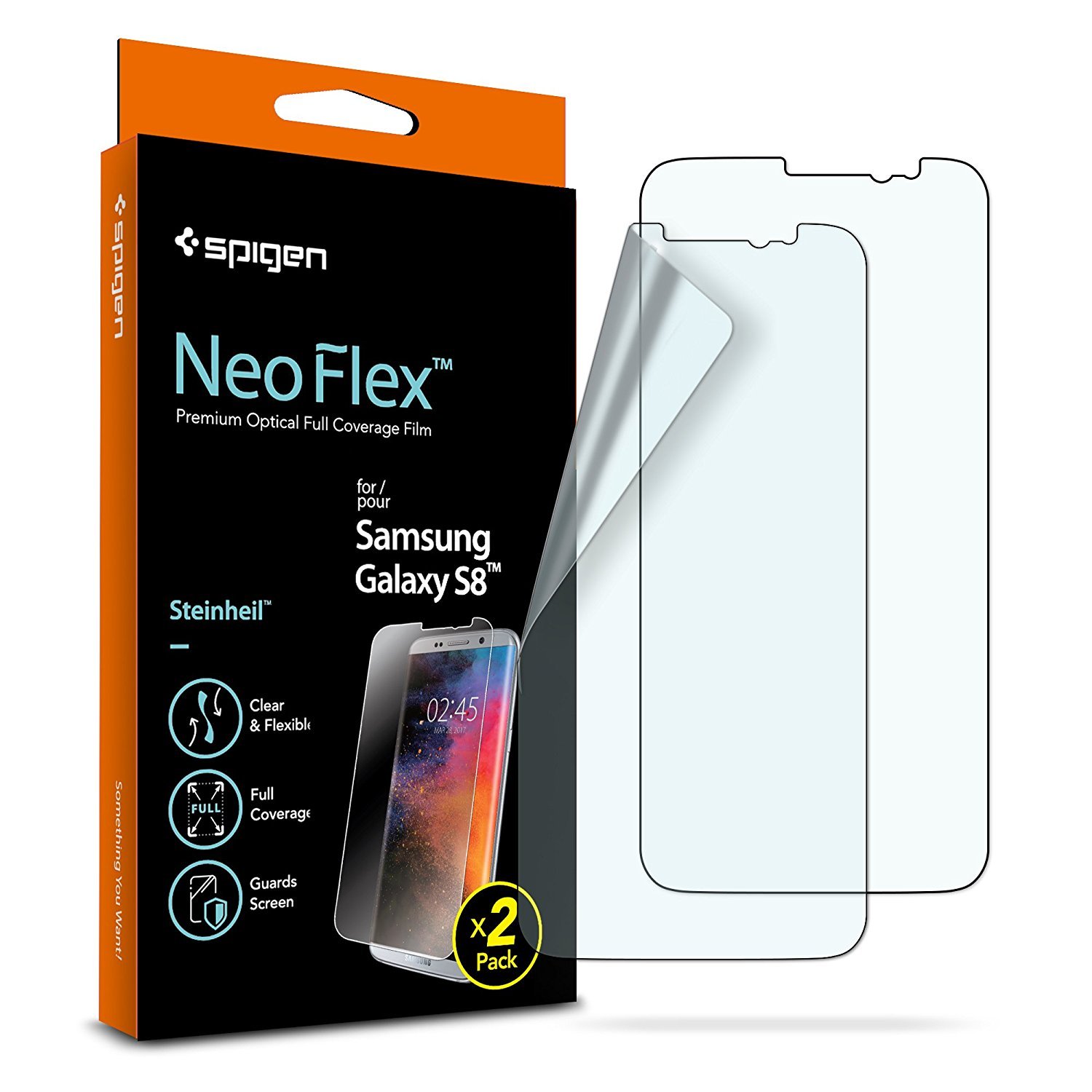
Spigen makes plenty of great cases for the Galaxy S8, so it only makes sense that they'd also offer a screen protector that's case compatible. Because it's a flexible film, the NeoFlex can offer full protection for your screen without affecting the touch responsiveness. Get this two-pack for just $9.

See at Amazon

This recommendation also came from the AC community and is a good pick if for a film protector that requires a wet installation. If you're comfortable with taking the time to properly for a film screen protector with a wet installation, you should be happy dropping $9 for a two-pack.

Spigen recommends installing the screen protector with a case already on, which might be a marketing ploy to get you to buy one of their cases, too, but they make some great cases and paired with a Spigen case, your Galaxy S8 will be protected from drops and also safe from scratches on the screen.

IQShield Case Friendly Film Screen Protector (2-pack)

Best Value

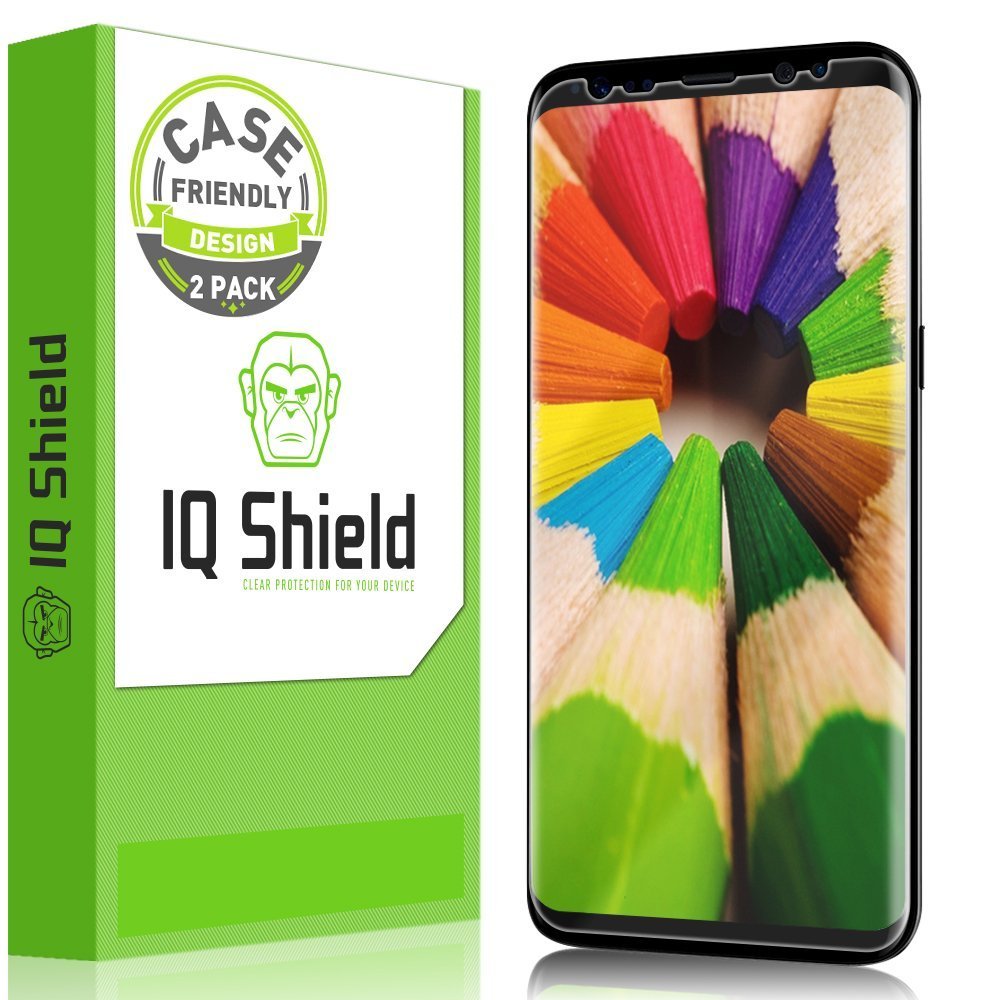
IQShield offers a two-pack of plastic film screen protectors that are compatible with even the most rugged cases. This is a paper-thin screen protector that you will hardly notice after a clean installation. Get your two-pack of case-friendly screen protectors from IQShield for just $8.

See at Amazon

These screen protectors have an oleophobic coating to help prevent fingerprints and smudges and are easy to install. With over 100 5-star reviews on Amazon, you can buy with confidence.

Ringke Invisible Defender Full Coverage Screen Protector

Best Coverage

Ringke makes some quality accessories and their screen protector for the Galaxy S8 stands out from the rest for the wings that wrap around the sides of your phone. Since the film wraps around the edges, you have the button cutouts to help you achieve the perfect fit, even with a case installed. Get a two-pack for just $10.

See at Amazon

The kit includes everything you'll need for a clean installation, along with an extra screen protector in case your first one takes a beating and needs to be replaced. You can also get a two-pack for the Galaxy S8+, too, if you're rocking the larger device.

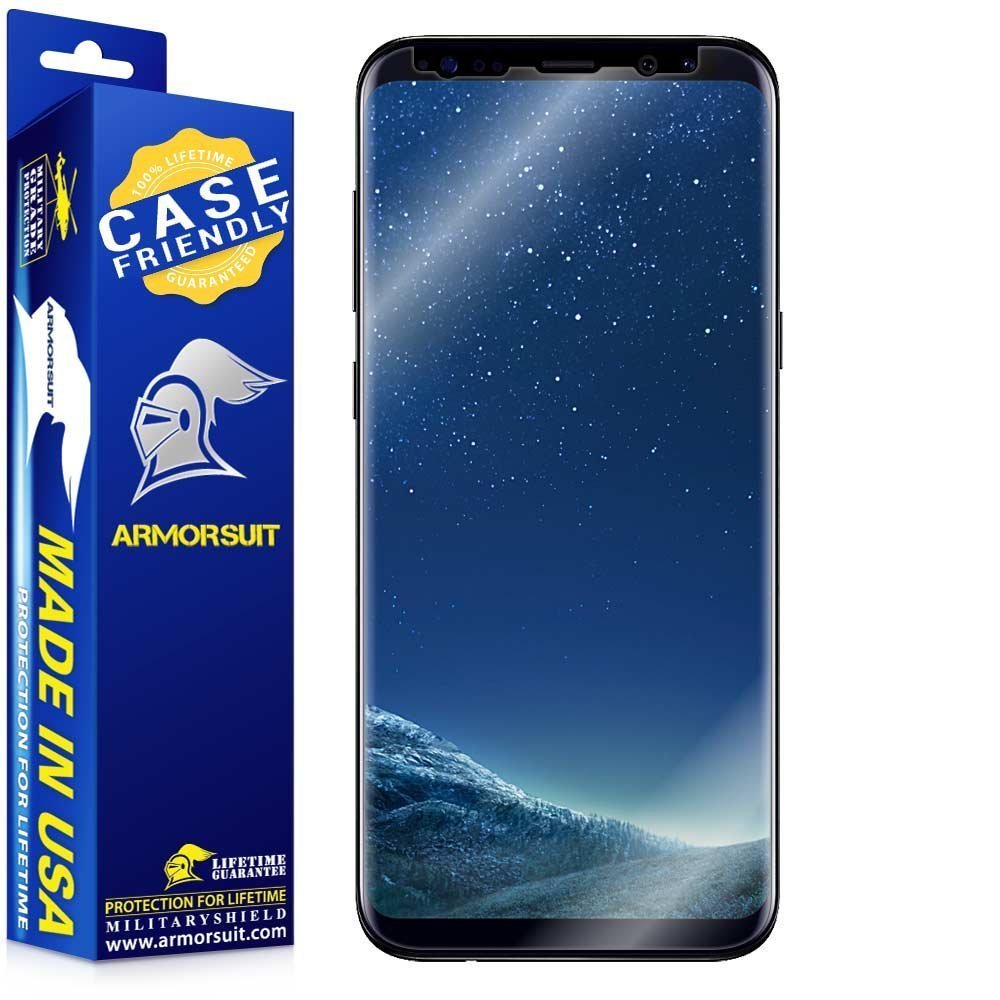
Armorsuit MilitaryShield Galaxy S8 Screen Protector

Best Protection

Made with a durable military-grade film, the Armorsuit MilitaryShield is a thin screen protector that offers edge-to-edge protection. It requires a wet installation, with all the required tools and wipes included in the box. It's available for just $8.

See at Amazon

Armorsuit claims that this protector is virtually scratch-proof, with self-healing technology that will help eliminate any minor scratches from keys or pocket sand. As with most wet install screen protectors, you need to let this thing sit and dry for a good long time (up to 12 hours) to ensure proper adhesion and get a nice clean fit. Attempt to put on a case too soon and you'll have issues around the edges. If you ever have an issue with it, you'll want to follow suit and contact Armorsuit's customer service to take advantage of that lifetime replacement warranty.

Update August 2018: Removed options no longer available and updated formatting and pricing information. These are still your best options for the Galaxy S8!


from Android Central - Android Forums, News, Reviews, Help and Android Wallpapers https://ift.tt/2jPtZeU
via IFTTT

Lenovo Yoga Chromebook: MrMobile is in awe at the size of this lap(top)

Bias alert: when I see the word "Chromebook," normally I think either low-cost low-capability devices for schoolkids … or super-premium, super-portable Pixelbooks for, well, Google employees. The notion of a massive desktop-replacement laptop never enters my mind – but Lenovo's Yoga Chromebook is just that.

The Yoga Chromebook is an utter monster of a machine, with a four-pound aluminum chassis that looks big enough to accommodate a 17-inch display (though it settles for a 15.6" panel instead). The battery carries a similar surprise, coming in at 56 Wh when the casing seems large enough to accommodate a power pack nearly double that size. But Lenovo didn't build this behemoth so you could take it around town in your totebag; instead it envisions a life of recumbent luxury for the Yoga Chromebook, staying mostly plugged-in while its user enjoys a little Netflix or YouTube with their web surfing. If you spring for the model with a 4K panel, that almost makes sense at $749 – assuming you're willing to pick up a MicroSD card to complement the anemic 64GB/128GB storage options. And also assuming you think a massive Chromebook is a good investment.

Check out MrMobile's Yoga Chromebook Hands-On from IFA 2018 in Berlin, and be sure to subscribe to the YouTube channel so you don't miss the full review when it goes live later this season!

Stay social, my friends


from Android Central - Android Forums, News, Reviews, Help and Android Wallpapers https://ift.tt/2LSGWj4
via IFTTT

LG G7 One hands-on: The G7 sold its soul for great Android One software

Take a few hardware compromises to get the software you really want.

LG used the IFA 2018 trade show to announce its first-ever Android One phone — and it did so with the least amount of fanfare possible, simply dropping a press release. That's mostly because the LG G7 One is ... kind of an odd phone. Ostensibly it's an LG G7 — except in a handful of places where it definitely isn't.

The LG G7 One has the exact same dimensions as the standard G7. It has the same 6.1-inch display, and same hardware features in terms of its headphone jack and DAC, BoomBox speaker system, 3000mAh battery, IP68 resistance, fingerprint sensor and buttons. But the changes are in the details — the metal frame has a slightly textured matte finish, not unlike the the Galaxy Note 9, and the glass back is frosted for a soft texture as well. It's a classy, understated look — which is decidedly different from the regular G7. It feels great, too — but it's definitely lost all of the LG flair that made the G7 stand out from the crowd a little bit.

You keep a surprising amount of the unique hardware features, and lose LG's software.

I love that LG has retained most of the G7's core features for this Android One version, but you do have to take a few annoying spec shortcomings in order to get the nice hardware and software combination. The lack of a secondary wide-angle camera is the biggest one — our friend MrMobile is right when he says that one of the main reasons to buy a G7 for its unique wide-angle shots. The processor steps down to a Snapdragon 835, but I'm not worried about performance with Android One in tow — the same could be said for the 32GB of internal storage, but I sure wish it was 64GB like the standard G7.

But in return for losing some of what gives the G7 its soul, you get Android One instead of LG's software. For as much as that software has improved over the past two generations, many will say they'd just prefer LG get out of the way and let Google handle that part — and that's what you get here. You get the necessary bits to interact with LG's hardware features — like the Quad DAC — and that's it, the rest is Android One like any other phone with the brand. You also get guaranteed security and platform updates, which you definitely can't count on with LG's own support.

It's frustrating to lose some features, but this could still be the best Android One phone.

It's tough to fully evaluate the LG G7 One right now, because pricing and availability information is going to make or break it. On one hand, it's disappointing that the couple of spec drops and the loss of the wide-angle camera make this a pretty generic device rather than one that builds on LG's few unique strengths by being "a G7 with cleaner software." But at the same time, the LG G7 One could easily be the best Android One device yet, as a majority of the phones with Android One software land in the mid-range price segment or have many more compromises.

It's pretty clear what LG's attempting to do with the G7 One. It's inexpensive to keep making G7s, swap out a few components and put Google-provided software on them in order to expand its phone sales and address a different price bracket. But in doing so, it clearly made deliberate decisions to remove things that would've made the G7 One more desirable. LG kept most of what makes the G7 unique, which is why this is such a nice phone, but dropped a few key parts to make sure the Android One version doesn't outshine the ThinQ model.


from Android Central - Android Forums, News, Reviews, Help and Android Wallpapers https://ift.tt/2C5jQ9r
via IFTTT

Saturday, September 1, 2018

What you missed this week on CordCutters.com

Hype. You missed the hype. Or, maybe there's been no way to avoid it.

Hype is a funny thing. It's almost impossible to live up to, and yet it's also impossible to avoid.

Amazon has been hyping Tom Clancy's Jack Ryan for what seems like forever. Months and months. And now it's finally here, available for binging on all the platforms that support Amazon Prime Video. (Which is pretty much everything.) And the while I'm not usually a fan of blasting through series so fast it's almost impossible to do so with any real enjoyment, Jack Ryan didn't once slow the pace. At only eight episodes — with the longest coming in at barely over an hour, and the shortest clocking in at 42 minutes — it's a quick, easy watch.

And the series was good. Maybe not great, but definitely watchable. John Krasinski is a pretty benign Jack Ryan — a character who perhaps is rivaled only by Jack Bauer when it comes to one person finding himself in the middle of all sorts of terrorist hijinks. Wendell Pierce is great as Jim Greer (with a spoiler-riffic — yet ultimately superficial secret, and his expletives remain in the caliber of Mr. Samuel Leroy Jackson.

But after digesting things for a bit, I think maybe it was Ali Suliman — as terrorist mastermind Mousa Suleiman — who brought the best performance to the series. It's too easy for the terrorist storyline to employ the usual tropes. And while some of that is unavoidable, he still brings a human aspect to the role — and that humanity plays an important twist later in the series.

So does Jack Ryan live up to the hype? Maybe not. But then again maybe there's no way it could. It's good. I'll watch the second season, for sure. But ultimately it's a decent action series in the same vein as Jack Bauer and Jason Bourne, borrowing the characters from Tom Clancy's world.

Check out Tom Clancy's Jack Ryan on Amazon Prime Video and let me know what you think.

Here's what else you missed this week on CordCutters.com:


from Android Central - Android Forums, News, Reviews, Help and Android Wallpapers https://ift.tt/2PTiilT
via IFTTT

Sony Xperia XZ3 hands-on: Damn fine hardware, with potential pain points

This is some beautiful hardware that steps beyond the XZ2 in the right ways.

Sony's strategy of releasing a new flagship phone every six months means you don't have to wait long to see the company's latest mobile tech. But it also means that the generation-over-generation changes are extremely subtle compared to others that refresh once a year. The Xperia XZ3 hasn't broken that mold, but what has changed is notable and the overall product is still enticing — particularly from a hardware perspective.

It's easy to dismiss the XZ3 as "yet another Sony phone" at first glance — and I'll admit that was my first reaction — but believe me, there's more to this hardware than you think. Sony's design languages is intact, but the details dramatically change the feel of this phone. The 6-inch display makes this phone slightly larger than the XZ2, but it doesn't feel as big or "pillowy" as I liked to refer to the XZ2.

The aluminum frame thins out around the sides of the phone, the back is flatter across the middle and the curves are more subtle. The curved screen makes a massive difference to the feel of the phone because of how it lets the glass more aggressively curve over into the thin sides. In short, it feels like the Galaxy S9+ — and that's a really good thing. And call me crazy, but I think Sony's execution of the metal, glass and joins is actually better than Samsung's latest. The color selections Sony made are absolutely fantastic. Whether you go with the monolithic all-black, the pleasant sea foam green or my personal favorite white-and-silver, each one has a nice mixture of finishes and a great depth to the color.

Sony managed to notably improve on the XZ2's hardware; it's stunning.

The new 6-inch OLED display looked really good to my eyes, but then again you expect that in this level of device. What I didn't expect from Sony was shrunken top and bottom bezels, which brings the XZ3's edges closer to what the rest of the industry has reached. They're now down to the size where you can give them a pass, at least if you consider the new and improved speakers.

The one curveball feature on the XZ3 that I can't wrap my head around is "Side sense," the feature not unlike HTC's Edge Sense that lets you tap along the sides of the phone to perform actions without pressing a button. Sony has a pretty basic implementation here: you double-tap your thumb on either side of the phone, and a menu pops out with apps you can launch. It's basically the same as using an Edge panel on a modern Galaxy phone, except you don't have to look at the little pull-in tab all the time.

This new 'Side sense' feature needs some fine tuning.

Unfortunately, I spent several minutes trying to get it to consistently trigger and just couldn't make it happen with anywhere near 100% accuracy. You need a pretty firm double-press, which can be tough on a phone with such a thin metal edge. It's a very neat idea that could be incredibly useful if Sony fine tunes the system and makes it more configurable. And unlike the HTC U12+ it isn't a core part of the phone's navigation, so I'm willing to give it a "wait and see" pass for the moment.

Sony's also shipping this phone with Android 9 Pie out of the box, which gives it a leg up over all of the phones that launched recently with Oreo. Sony's software continues to be fast and clean, following in the footsteps of Google Pixels albeit with a little extra Sony style — something most people either love or hate.

As ever, there are (potential) caveats here. I still don't like the fingerprint sensor placement, as just like the XZ2 it's way too far down the back of the phone. There's no headphone jack here, either. The display looked great in my short time with it, but Sony has a track record of screens with weak outdoor visibility — hopefully switching to OLED fixed that. I'm also concerned by the longevity of a phone this big with a 3300mAh battery. The camera, too, has potential to be a dealbreaker. Taking a few shots in the (admittedly poorly lit) Sony booth at IFA 2018, the camera was sometimes slow to capture, and the grain and chroma noise in the resulting photos was immediately noticeable — that's just not something I can put up with in a $900 phone.

Sony made a darn nice phone, and no longer has a bunch of bone-headed mistakes.

When using the Xperia XZ3, I fell back to the usual question of whether it's a "too little too late" situation with Sony's flagships. The company is so saddled by the baggage of releasing expensive, subpar phones for so long that now it almost doesn't have a chance to capture any market — even though it's fixed most of its flaws. The Xperia XZ3 looks and feels like a phone that's every bit as nice as — or nicer than — the high-price competition. It no longer has bone-headed mistakes like an oddly placed NFC antenna or a missing fingerprint sensor. It has most of the features that people desire (or at least complain about not having) like an SD card slot, stereo speakers, notch-free display, simple up-to-date software, wireless charging and more. I can't yet find a critical problem here — just issues that come down to preference.

If you're someone who doesn't scoff at the Galaxy Note 9's $1000 price tag, I'm not sure how you can look at the Xperia XZ3 and not think it's at least worth considering at $900.


from Android Central - Android Forums, News, Reviews, Help and Android Wallpapers https://ift.tt/2LKFW0l
via IFTTT

Huawei unveils EMUI 9 based on Android 9 Pie, beta applications start today

Pie on your P20.

The Huawei Mate 20 is launching in just over a month, and following on from yesterday's Kirin 980 SoC announcement, we've just had our first glimpse of the software that'll run on the new handset.

EMUI 9.0 is based upon Android 9 Pie, and brings improved performance, faster gaming, a streamlined UI, digital wellbeing features and visual improvements.

EMUI 9 beta screenshots

The new UI sees Huawei building upon the foundations of EMUI 8, with a focus on lighter colors, and improvements to the consistency of EMUI's look and feel. New fullscreen visuals for alarms and incoming calls aim to take advantage of the large screens of modern smartphones, while artistic illustrations punctuate the Settings app and other preloaded apps. EMUI's settings have also been simplified considerably, surfacing the most useful options in each section, and reducing the number of menus from 940 to 843.

EMUI 9 beta screenshots

And in Huawei's own apps, controls and tabs have been relocated down to the bottom of the screen, where they're easier to reach on larger devices like the P20 Pro and Mate 10.

The new EMUI is faster, prettier and smarter.

As you'd expect in firmware based on Android 9 Pie, there's a new task-switching setup based around gesture input. A swipe up from the bottom bezel opens the recent apps menu, or sends you home. And a swipe inwards from the left bezel goes back. The new gesture navigation system wasn't enabled in the beta version of EMUI 9 we tried at an event in Berlin today, but it's likely this will be the default setup on the next Huawei flagship.

EMUI 9 also doubles down in performance; Huawei quotes 12.9 percent smoother operation on the new version, with app load times up 12% in Instagram, 16% in Amazon and 11% in Spotify compared to EMUI 8. Huawei's GPU Turbo 2.0 feature also promises faster gaming on the new OS version, further improving upon the GPU Turbo feature pushed out to phones including the P20 Pro and Honor 10 in recent months.

The new software should also make it easier to track your usage and make it easier to disconnect, with digital wellbeing features built in as standard. This isn't exactly the same as Google's Digital Wellbeing features on the Pixel phones; rather, Huawei has built its own interpretation of those features, with the ability to limit app usage and "wind down" with a greyed-out interface as bedtime approaches. Parents will also be able to set limits on app usage for kids.

The EMUI 9 beta process starts today. Huawei announced that The P20, P20 Pro, Mate 10, Mate 10 Pro, Honor 10, Honor View 10 and Honor Play will be able to apply to test this early version of EMUI 9. Expect the full version to ship on the Mate 20 later this fall.


from Android Central - Android Forums, News, Reviews, Help and Android Wallpapers https://ift.tt/2Pw9j9h
via IFTTT